
There are often a lot of misconceptions about sugar both in our diets and in our horses, however it is essential to life for us all and something that we should take the time to fully understand.
We all, including our equines, need sugar to be able to perform normal physiological functions. Glucose is the primary energy source utilised by body cells and organs including the brain, making it impossible for our horses (and us) to survive without sugar! Glucose is in fact the only energy source the brain can use. If the horse is not supplied with enough sugar through the diet then they will convert other nutrients into glucose to meet that demand.
so what is sugar?
Sugar is a carbohydrate, like starch and fibre, and sugar can be split into types depending on the number of units they contain:
• Monosaccharides or ‘simple sugars’ consist of a single unit. These include glucose
• (blood sugar), fructose (fruit sugar) and galactose.
• Disaccharides consist of two units and include sucrose (the kind that goes in your tea
• and the sugar contained in molasses), lactose (milk sugar) and maltose (from partially
• digested starch).
• Oligosaccharides are made up of multiple units and include fructans and starch.
would horses eat sugar in the wild?
Sugar is a carbohydrate, like starch and fibre, and sugar can be split into types depending on the number of units they contain:
• Monosaccharides or ‘simple sugars’ consist of a single unit. These include glucose
• (blood sugar), fructose (fruit sugar) and galactose.
• Disaccharides consist of two units and include sucrose (the kind that goes in your tea
• and the sugar contained in molasses), lactose (milk sugar) and maltose (from partially
• digested starch).
• Oligosaccharides are made up of multiple units and include fructans and starch.
Can we avoid sugar for our horses?
Sugar is a carbohydrate, like starch and fibre, and sugar can be split into types depending on the number of units they contain:
• Monosaccharides or ‘simple sugars’ consist of a single unit. These include glucose
• (blood sugar), fructose (fruit sugar) and galactose.
• Disaccharides consist of two units and include sucrose (the kind that goes in your tea
• and the sugar contained in molasses), lactose (milk sugar) and maltose (from partially
• digested starch).
• Oligosaccharides are made up of multiple units and include fructans and starch.
is this a problem for our horses?
Sugar is a carbohydrate, like starch and fibre, and sugar can be split into types depending on the number of units they contain:
• Monosaccharides or ‘simple sugars’ consist of a single unit. These include glucose
• (blood sugar), fructose (fruit sugar) and galactose.
• Disaccharides consist of two units and include sucrose (the kind that goes in your tea
• and the sugar contained in molasses), lactose (milk sugar) and maltose (from partially
• digested starch).
• Oligosaccharides are made up of multiple units and include fructans and starch.
So what do we know?
Sugar is a carbohydrate, like starch and fibre, and sugar can be split into types depending on the number of units they contain:
• Monosaccharides or ‘simple sugars’ consist of a single unit. These include glucose
• (blood sugar), fructose (fruit sugar) and galactose.
• Disaccharides consist of two units and include sucrose (the kind that goes in your tea
• and the sugar contained in molasses), lactose (milk sugar) and maltose (from partially
• digested starch).
• Oligosaccharides are made up of multiple units and include fructans and starch.
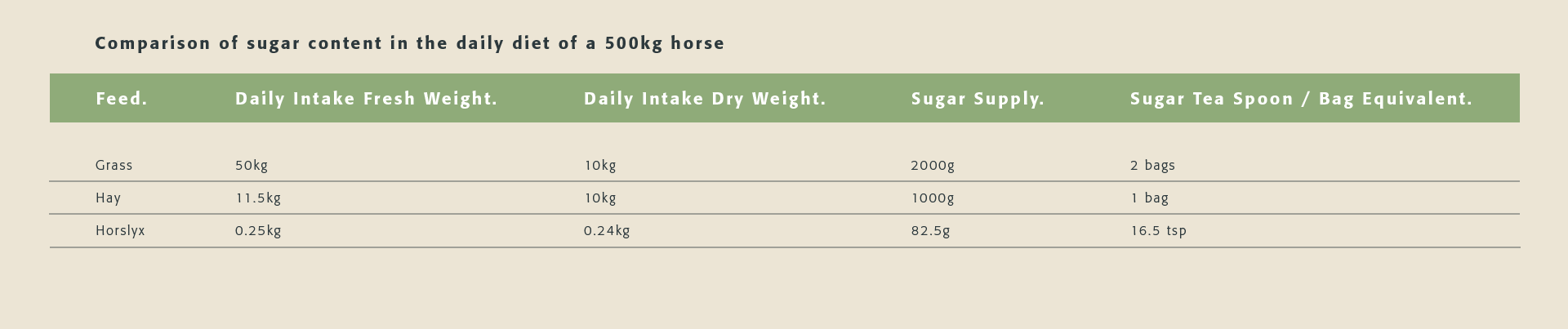
Grass is the largest source of sugar in the horse’s diet, typically containing 20% sugar in the dry matter (DM). A typical 500kg horse will easily consume 50kg of fresh grass (approximately 10kg DM) in a single day, equating to around 2000g of sugar!
so what is sugar?
Sugar is a carbohydrate, like starch and fibre, and sugar can be split into types depending on the number of units they contain:
• Monosaccharides or ‘simple sugars’ consist of a single unit. These include glucose
• (blood sugar), fructose (fruit sugar) and galactose.
• Disaccharides consist of two units and include sucrose (the kind that goes in your tea
• and the sugar contained in molasses), lactose (milk sugar) and maltose (from partially
• digested starch).
• Oligosaccharides are made up of multiple units and include fructans and starch.
is this a problem for our horses?
Sugar is a carbohydrate, like starch and fibre, and sugar can be split into types depending on the number of units they contain:
• Monosaccharides or ‘simple sugars’ consist of a single unit. These include glucose
• (blood sugar), fructose (fruit sugar) and galactose.
• Disaccharides consist of two units and include sucrose (the kind that goes in your tea
• and the sugar contained in molasses), lactose (milk sugar) and maltose (from partially
• digested starch).
• Oligosaccharides are made up of multiple units and include fructans and starch.

From the above table it can be seen that Horslyx has the highest percentage content of sugar at 33%, however it has the lowest feeding rate of 250g. This means that it would only contribute 82.5g of sugar to the diet of a 500kg horse. The low sugar complete fibre feed (such as those recommended for laminitis prone equines) has a very low percentage sugar content of 5%, but when fed at the recommended rate of 2.5kg for a 500kg horse would contribute 125g of sugar to the diet. Both these products are designed to be fed little and often, Horslyx by licking occasionally throughout the day, and the low sugar complete fibre feed by several bucket feeds, and in this manner the sugar should be digested in the small intestine over a period of 24 hours as nature intended.
so what is sugar?
Sugar is a carbohydrate, like starch and fibre, and sugar can be split into types depending on the number of units they contain:
• Monosaccharides or ‘simple sugars’ consist of a single unit. These include glucose
• (blood sugar), fructose (fruit sugar) and galactose.
• Disaccharides consist of two units and include sucrose (the kind that goes in your tea
• and the sugar contained in molasses), lactose (milk sugar) and maltose (from partially
• digested starch).
• Oligosaccharides are made up of multiple units and include fructans and starch.
would horses eat sugar in the wild?
Sugar is a carbohydrate, like starch and fibre, and sugar can be split into types depending on the number of units they contain:
• Monosaccharides or ‘simple sugars’ consist of a single unit. These include glucose
• (blood sugar), fructose (fruit sugar) and galactose.
• Disaccharides consist of two units and include sucrose (the kind that goes in your tea
• and the sugar contained in molasses), lactose (milk sugar) and maltose (from partially
• digested starch).
• Oligosaccharides are made up of multiple units and include fructans and starch.